HAZEL GLOVES!
Just found a new population of Hypocreopsis rhododendri in Mid Argyll!
ATLANTIC RAINFORESTSPECIES SPIELSFERNS
IM
12/17/20252 min read
It's a good day in the woods, when tracking down some filmy ferns last recorded thirty years ago isn't the highlight of your day.
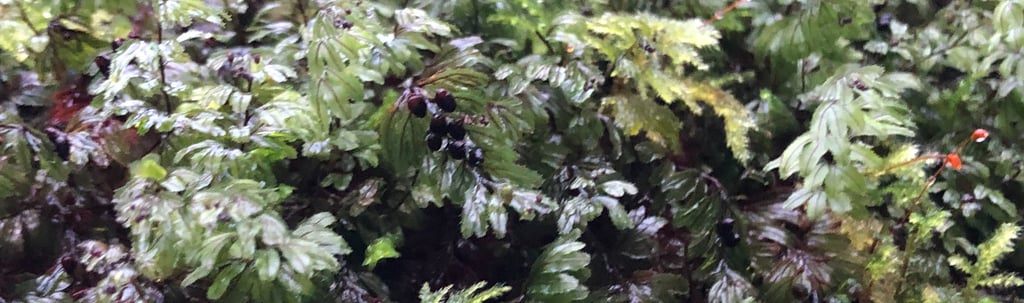
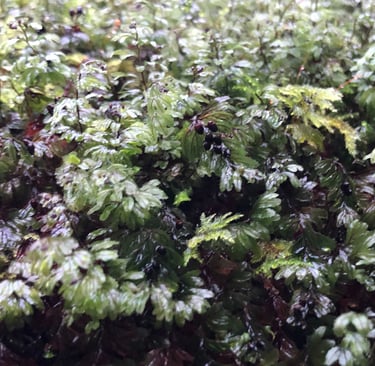
I always keep an eye out for filmy ferns (Hymenophyllum), partly because they are a useful indicator of good habitat for oceanic bryophytes and lichen, but mostly I just think they're great. So you can imagine my excitement at finding a nice big patch, growing as epiphytes on a large oak by a burn.
There are two native species of Hymenophyllum in the UK. This is the more common, but still rather lovely, Hymenophyllum wilsonii. The easiest way to tell it apart from Hymenophyllum tunbrigense is that the very prominent nerve runs all the way to the edge of the frond.
Apparently, H. wilsonii is named after the bryologist W. Wilson who noticed the differences between the two fern species. I'm grateful to the gent, but I do wish folk wouldn't name species after people as this is generally pretty useless as a way of remembering which is which. It also just seems more than a little hubristically anthropocentric.
Anyway, I wasn't too fussed about that. I was enjoying myself.
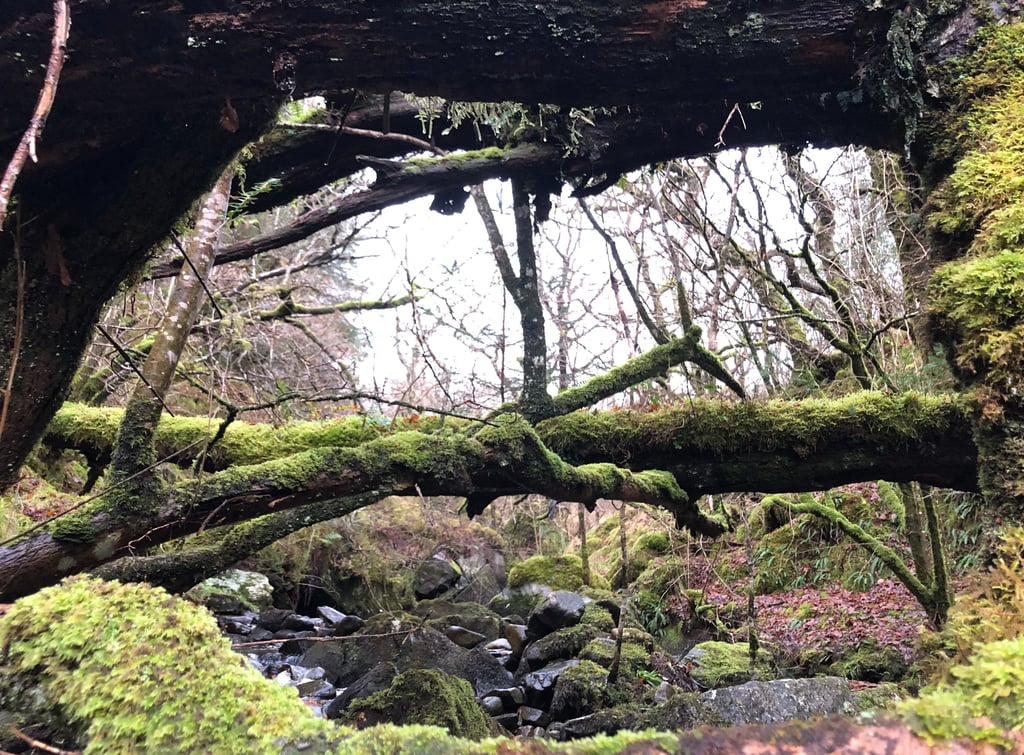
I left the oak wood, and was followed by a couple of inquisitive sheep (possibly confused by my big, woollen jumper) into a very dense area of hazel woodland. I've never been into a hazel woodland as dense as this before - even in winter the canopy is so dense that it felt, dark, damp and like a very good place to be a moss. You can see how hazel woodlands can form climax vegetation in the west, and there were no signs of oak
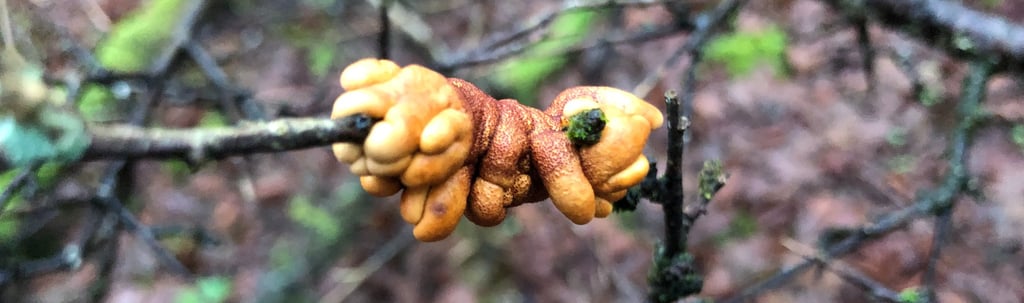
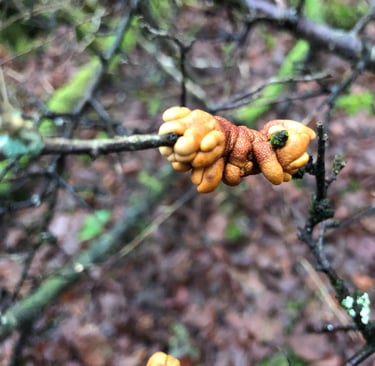
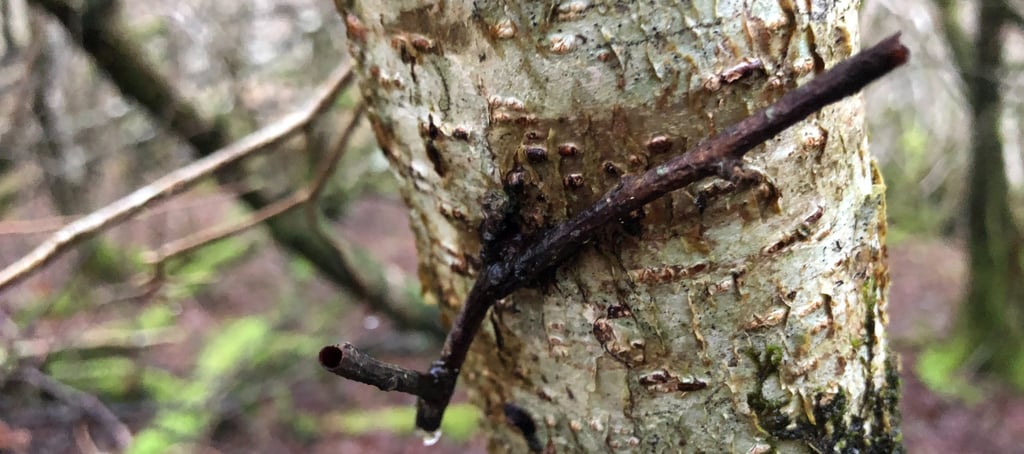
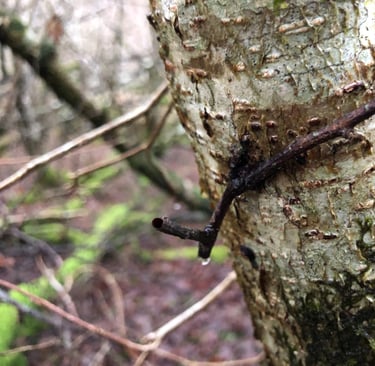
And there they were: a handful of crumpled orange blobs, floating upon a dead blackthorn, like a grotesque Christmas tree. Super exciting - hazel gloves fungus is a rare find and something I've been hoping to see for a while now. The species is under assessment for the IUCN Fungi Red List.
Seeing hazel gloves on a blackthorn, Prunus spinosa, was a surprise to me. However, apparently this has been observed before, though it only seems to be able to grow on dead blackthorn shrubs, whereas it is more commonly associated with live hazel.
Hazel gloves are parasitic on the glue crust fungus, Hymenochaete corrugata. We often see the glue crust fungus in the woods near us. This fungus is interesting in itself - it's ability to bind branches together allows it to move between trees, and it can hold deadwood right up off the ground.
That's all for now. The word on the ivy is that at least one person out there reads this blog, so I'll try to get back into it.
Catkin Ecology
Finding Scotland's missing habitat
CONTACT US
info@catkinecology.co.uk
+44 7918 024809
© 2025. All rights reserved.